How MSP-as-a-Service Changes Your Game (979)
Juan Fernandez joins me to explain how Summit Holdings’ MSP as a Service framework helps MSPs reclaim capacity, protect margins, and modernize service delivery in the era of AI and MSP 5.0. We dig into common fears about losing control, how white-labeled operations can stay aligned with your tools and processes, and why community-focused, US-based, IT compliance‑minded support can be a game-changer for MSP growth. If you’re wrestling with labor, cybersecurity delivery, and vendor overload, this conversation lays out a practical path forward.



If you’ve ever stared at your PSA at 10 p.m. wondering how you’re supposed to grow your MSP and still handle every ticket, this episode is for you. Juan Fernandez breaks down his new MSP as a Service model and shows how boutique and growing MSPs can instantly bolt on a white-labeled, US-based service delivery engine without giving up control of their clients.
Why listen
- Learn what “elastic service provider” really means and how Juan’s team plugs into your existing stack, contracts, and service offerings.
- Hear real numbers around MSP labor, cost per seat, and how reclaiming up to 1,500 hours per tech per year can transform your profitability.
- Get clarity on using co-selling, white-label support, and shared operations to protect relationships while still scaling managed services and cybersecurity delivery.
- Understand how this model fits into the MSP 5.0 era, AI disruption, and the push toward more automated, ITIL-aligned operations.
- Discover how Summit Holdings and MSP as a Service position themselves alongside vendors like ThreatLocker (threatlocker.com), NetAlly (netally.com), OneStream (onestream.com), and TruGrid (trugrid.com) to support MSPs end to end.
Guests
- Juan Fernandez, Summit Holdings: summitmsp.com
- MSP-as-a-Service: https://msp-aas.com/
- LinkedIn: https://www.linkedin.com/in/1jf
Shout-outs
- Johnny Georges, Tree T-Pee: treetpee.com
- Johnny Georges, Shark Tank Appearance: https://youtu.be/LZEY15Fsjgk?si=u2YrYjdqOJ6V5Zfs
- Michael Slater, Sherweb: https://www.linkedin.com/in/slatermichael/
- CyberQP: cyberqp.com
- Thread: getthread.com
- MSP Process: mspprocess.com
Companies / Vendors / Products Mentioned
- NOCDOC (operations backbone within MSP-as-a-Service): summitmsp.com, LinkedIn:
- MSP Owners Group: , LinkedIn: https://www.linkedin.com/company/msp-owners-group
=== SPONSORS:
- Livestream Partner, ThreatLocker: https://www.itbusinesspodcast.com/threatlocker
- Technology Partner, NetAlly: https://www.itbusinesspodcast.com/netally/
- Technology Partner: 1Stream by Bvoip: https://www.itbusinesspodcast.com/bvoip
- Travel Partner: TruGrid: https://www.itbusinesspodcast.com/trugrid
- Digital Partner, Designer Ready: http://itbusinesspodcast.com/designerready
=== SHOW MUSIC:
- Item Title: Upbeat & Fun Sports Rock Logo
- Item URL: https://elements.envato.com/upbeat-fun-sports-rock-logo-CSR3UET
- Author Username: AlexanderRufire
- Item License Code: 7X9F52DNML
=== Connect with Uncle Marv
🌐 Website: https://www.itbusinesspodcast.com/
🎙 Host: Marvin Bee
🛒 Uncle Marv’s Amazon Store (gear & tools I recommend): https://amzn.to/3EiyKoZ
☕ Support the show: https://ko-fi.com/itbusinesspodcast
If you found value in this episode, share it with another MSP, IT provider, or tech entrepreneur. Your support helps keep practical, no-nonsense IT business conversations coming every week.
Hello friends. That's right, Uncle Marv here with another episode of the IT Business Podcast. This is the weekly live show, 8 p.m., Wednesday nights.
And tonight, oh, I think it's going to be an interesting show. We are going to talk about something that could radically change how you deliver services and scale your MSP. For those of us that are small, boutique, or even just simply growing, yeah, you could be at 2 and 3 million growing and still being asked to do more than ever before, keep clients secure 24-7, support hybrid work, you've got to wrangle, cloud sprawl, and you're supposed to do all of that while margins get tighter and the talent pool gets thinner.
So that is going to be a topic tonight, MSP as a service. My good friend Juan Fernandez will be coming on to talk about what he just launched yesterday, and it should be a good conversation. But before we do that, I need to do one quick... It's not a mea culpa, but normally when I come back from conferences, I have a little swag show, and I have not yet been able to do that from the three conferences that I went to over the four weeks.
So I do want to at least make one bit of acknowledgement. So I always used to say that food is not swag. And I used to comment that if you're bringing, you know, mints and stuff like that, that's not really swag, that's stuff you can eat and it'll be gone pretty quickly.
But I should go back and remember that CyberQP kind of threw that, you know, away because they had this hot sauce that they had been giving away, and I kind of poo-pooed that, but yet they would say that that was always what they ran out of, what people wanted to get, and so they would just literally stock up on the CyberQP hot sauce. And then of course, this came along, and, you know, they didn't put their name on it, but they did put on where it says, no tickets, no worries. We know that's our good friends over at Thread.
They came out with their own hot sauce. And so I was walking around at a recent show, and I came across a bag of chips from MSP Process, and this is one of their bags, and they put their sticker on it, and I just looked at that and said, come on now, chips can't be swag. But then they started to tell me the story that at the very last minute or something, they went and got these chips, and these are supposedly some very coveted chips from where they are from.
Uh, these chips are from a company called Old Dutch Foods. They are in Calgary, Heartland, and Winnipeg up in the great white north of Canada. There's also another bag, uh, called Ketchup Chips.
And I kind of said, Eh, all right, let me take a look at that. And I did my research, and yeah, they're right. These things are coveted.
So one of the things that I've always said about swag is that it should be something that people want, people will use, that's not going to be thrown away. Usually it's shirts that we would wear in public. It's, well, socks now that we would wear.
It's pens that we actually will use because they write well and they stand up to the test of time. So we now have to add the MSP Process chips from Old Dutch. And I don't know if this is the name.
All dressed assonet, uh, Assaisonnee, and ketchup. So while I'm not going to evaluate any other swag today, I wanted to do a special shout out to MSP Process, uh, for their chips. So there you have it.
I also, before we get to our guest, I want to do something a little bit different. Um, I'm not going to do a Florida man story. I'm not going to do anything here.
Let me get my, so many screens up. I can't see my thing about Bobby's story that I want to read. Here we go.
I want to play a video and I'm going to play the video in silent mode. So if you're listening to this after the fact, uh, on the podcast, don't worry. I'm going to give you, excuse me, a little bit of a blow by blow.
And I don't want to be sued by these folks, which is why the video is going to come up silent, but I will play the video. Play it. Oh, that's not the silent version.
So let me do this. Let me turn the volume down. There we go.
So when it first came out, oh, so many years ago, and at first I liked it, but then I did not like it because I thought that they were killing people's dreams by telling them that they had to be at a certain margin. They had to do this. They had to do that.
And it was basically rich people telling unrich people how to run business, how to do all that. So I want to walk you through this moment on Shark Tank that I just saw this morning. It's a clip that features a guy named Johnny Georges, and he's obviously not an IT person.
He's not in SAS, not in cybersecurity. He is a farmer's son who created a product called Tree TP, which is a water container and frost protection system for trees. He's here in Florida, folks, and this is why it's important.
We have obviously citrus food, orange and stuff like that. And when it gets cold, we can lose our fruit. But the other thing that happens is this Tree TP wraps around the tree and it dramatically reduces water usage.
So farmers normally use around 25,000 gallons of water per tree per year. With Tree TP, they can cut that down to about 800 gallons per tree and still get better growth and about 30% more growth on new trees. So with less water, faster ROI and better frost protection for the farmer's livelihood.
So of course, the sharks dig in. They ask him, how does it work? He explains that farmers just usually turn on their pumps and run them 10 to 12 hours and the water sprays everywhere. It has runoff.
With Tree TP, they contain the water around the tree. It delivers the equivalent of three inches of rain in about 30 minutes right where the roots need it. Blah, blah, blah.
And then he tells the story that I think we as MSPs can relate to. During a bad freeze, he goes into a grove to put out five of his TPs as a demo. It wasn't his farm.
The woman who owns the grove came out, told him he was trespassing, and threatens to call the police. He apologizes, gives her his card, and walks away. A week later, she calls him back.
And he says, or she says, Johnny, I want to pay you for those five TPs. And he tells her, don't worry about it. But then she says, no, I want you to bring me 4,995 more.
The only five trees I've got alive in my whole grove are the ones you covered. So that's his case study. That's his incident response story.
It's the equivalent of the only data that I still have is the data that you backed up. Now, the part of the show that I think really matters for us, it turns to pricing and margin. The Sharks asked him why he sells his TPs for only $5.
Why not 10, 12, 15, or even 20? And Johnny says, because I'm working with farmers. They're not buying one. They're buying 20,000, 7,000.
He makes a point about the dollar per unit that if he sold 7,000 units, he made $7,000. And he feels that that's fair. So of course, the Sharks put back and say that they can't do that because he can't make money.
So you may who that shark is. I think everybody knows that if every farmer in America should have this product, then you need a distribution network, a sales team. You need 2,000 Johnnies out there selling it.
And somebody has to pay for all that. So in his view, the math doesn't add up. Then another shark looks at the exact same situation and sees something different.
He says, farmers are the cornerstone of America. There may be a lot of farmers out there who can't afford $12 per tree, but maybe they can afford six or seven. He says to Johnny, I'm going to give you everything you asked for, which was $150,000 for 20% of the business.
And his reasoning is that what you're doing is right. And you deserve the chance to make it big and do a lot of good. I'd like to be your partner.
So the show turns. It becomes emotional. Johnny thanks him.
You see the other Sharks kind of respond. Now, what does all this mean for us as an MSP? So I took away three things for this. And I'm turning them into questions that I'm going to post.
The questions are, are your prices and margins aligned with both sustainability and purpose? Number two, can you clearly explain why you charge what you charge? Johnny's explanation is simple. I'm working with farmers who buy in volume and I want to do right by them. Number three, what are your only tree survived stories? So Johnny's credibility did not come from a spreadsheet.
It came from a grove owner whose only surviving trees were the ones protected by his tree TP. So in our MSP, that might be the client whose data we recovered from a ransomware event, might be the one that we kept online during a hurricane, or the one who didn't lose a single day of productivity because we designed their environment properly. So my question to you is, do you have those stories? Do you capture them? Do you tell them and use them to help clients understand the real value of what you do? Johnny is not an MSP.
He's out in the groves dealing with frost water and farmers instead of firewalls, backups and M365. But the principles are the same. Know who you serve, price with intention, build enough margin to scale and never lose sight of the impact you're creating.
So that is the story I wanted to share and leave you with. When we come back, we will get into MSP as a service with our good friend Juan Fernandez. Is your business truly protected from cyber threats? ThreatLocker is the gold standard.
Zero trust endpoint protection, trusted by IT professionals everywhere. ThreatLocker blocks everything that is not explicitly trusted, denying all applications and scripts from running unless explicitly allowed, and also includes ransomware. Easy to deploy, easy to manage, and backed by a 24-7 support team that is lightning fast with response times around 60 seconds.
Stop cyber-attacks before they start and sleep easier at night. Lock down your endpoints and say goodbye to ransomware. Click on the ThreatLocker link in the show notes and start your free 30-day trial today.
Be sure to also check out our other amazing sponsors, NetAlly, whose handheld network test and analysis tools give IT pros fast, easy visibility into wired and Wi-Fi networks so they can quickly find and fix problems. OneStream, a unified communication and integration platform that centralizes voice, messaging, and contact center tools for MSPs with deep CRM and PSA integrations and automation. And TruGrid, your secure remote access platform designed to simplify delivering remote workspaces without VPNs or exposed firewalls.
For more details on these partners, check out their links in the show notes. All right. We are joined by my good friend Juan Fernandez, who made the big announcement yesterday.
Summit Holdings started MSP as a service, and this is a labor-first, white-labeled operating framework that lets MSPs instantly bolt on scalable service delivery capacity. Juan, welcome, my friend. Marv, it's awesome to be here, brother.
I appreciate you, man. Thanks for having me. Well, thanks for coming on.
So I've got two questions to start. Well, first, let me say happy belated birthday. Oh, see, you caught on.
Thank God you didn't ask how old I am, but yes, absolutely, brother. I appreciate that. Thank you.
So the first question is, was it intentional for you to actually make this announcement on your birthday? Yes and no, right? The way it worked out, we had a plan on announcing a little soon, but as it pushed past that moment, I said, you know what? I always give something back to the channel. Usually, I do like March birthdays where we get together in a van and I invite a bunch of folks, take them all out. I usually do that at CCF.
I said, this year, I can't do that. So I said, you know what? This is what I'm giving back to the channel. I'm going to give them the gift that I've spent time building and I was really pumped to do it.
So yeah, it kind of was and it kind of wasn't, but as the Lord might have it, it happened on that date and I was excited to be able to do it then. Okay. So my second question is going to kind of lead us down a path here.
So let me ask, what is the most common thing that you've been asked that you're kind of, I don't want to say tired of answering, but I want to scratch that off my list here. How is this different from what's out there? It's kind of one of these things where, one of my favorite comments of what I've asked people after we've done interviews, I say, what did you think about this when you saw it? And as they got to learn a little bit about it, they, they, they, they related it to this one moment. And I said, they said, you know about three eye Atlas? And I was like, sure.
They said, you know, it came out of nowhere. And yet all of a sudden it has this perfect trajectory through our satellite system on this amazing route and at a speed that's never been seen before. And if I have to think about any one thing, this is what I think about this is that it's almost, it was, it was no one saw it.
Everyone assumed it was going, I was, you were doing something else. And yet it's something that we didn't know was possible to even move like that. And now that we see this is really interesting.
So that question about that, I keep getting asked, how is this any different? It's really different. It's actually not just knock sock and service desk. It's an actual operating model, right? So when you think about others that offer services that may sound the same, not a lot of them are us-based, not a lot of them are ITO line.
Not a lot of them are CIS, you know, governed in the way we present it. Not a lot of them are destined for your success. A lot of them are appealing the margin out and adding it back in.
We are tooling products and services and support all together. And the hardest decision MSPs have to make is the margin. Like, what do I want to make? So when we do co-selling, because we also co-sell, so oftentimes my logo gets changed when there's opportunities where MSPs are like, Juan, can you help me? And we go help them, right? We get in there and we get dirty and we win together, right? We work with our vendors to build together.
We're building things that other vendors are just operating infrastructure. We're actually building success for MSPs. And that to me is very different.
It's being said in a certain way that we have a connotation to understand, but it's not the same. And so... So let me ask this question then, since I can't ask that. If an MSP is afraid to plug into an as-a-service model, because either they worry about losing control, because obviously if we're talking about small MSPs, solo techs, they're like, well, am I just handing over my business to somebody else? Larger businesses might look at this as a way to add on this hands-on service or whatever.
But what does that tell you about our processes and leadership in terms of somebody that's afraid to give control because we don't want to lose the business, or somebody that's too big and just looking for extra hands? I don't know that it signifies anything other than what I appreciate about where we're at, right? We worked really hard to get where we're at. And you should be respectful of your relationship with your customer. One of the things that actually makes me a little upset is where I see MSPs willing to work so hard to get a customer, and I mean hard, spend time and money and effort on building a relationship and then sell it off.
I'm like, what are you doing? Why would you do something like that? It kind of shocks me. And I'm like, there's a different way of doing things. And so I think from a leadership perspective, I appreciate those that are protective of their customer base.
That's what this has been built on, is reputation and relationships, right? We didn't grow originally because we had a huge sales team. We grew because we had reference points of doing a good job. And so for me, I take that seriously.
This is where the word elastic service provider came from when I designed it, was that we were able to pivot to the moments where you find your value to be the highest. And we meet you at that moment to say, hey, look, if you got a stack in a relationship with a vendor, then we'll just manage that for you. If you got a specific point where you want an exit point on a ticket to be escalated to you because you want to handle that, that's where we will do that.
And that's because we're ITIL based. We have framework internally that can manage to those moments. It's not like this is just chaos sitting back here, like we run this like an enterprise so we can manage to that level of opportunity.
And so I don't disregard their cautiousness because we've been burned so many times, Mark. I mean, the last thing I need to do is lose a relationship with a customer because I got bad support, right? That sucks, dude. And trust me, if you were ever a vendor of mine when I was an MSP, I was the worst because I had a very high delivery ratio in terms of customer success.
I was very fierce about that. And I'm like that now. And so our SLAs are extremely high.
They deliver and we pay attention to that so that those folks can feel comfortable that they have a stable platform to stand on. Now, what you're offering with this as a service, is this something that somebody comes in and becomes a part of? Do we have to change our delivery service to match what you're offering? Tell me how that works. This is where the explanation of the elastic service provider comes from, right? We can do all the things, right? We can manage your stack.
We can operate your stack. We can patch your stack. We can do all the things.
It just depends on what you want, right? If you already have an existing provider for an RMM and a PSA and you got your NOC tools and you got your SOC aligned and all the tools, your security stack, then we can manage those. Or you can say, hey, what does one look like, right? And we have pre-bundled best practices, all CIS aligned so that when you take it to your customer, it's already ready to go, right? Like I said, all you pick is your margin. So it just depends on the type of customer and where you're at.
If you've got contracts, by all means, you can keep your contracts. You can look at ours and see, we're decreasing the opportunity. So if you're like, hey, I really have always wanted to move to this security vendor.
All right, well, we'll just migrate all these over to that security vendor. To us, it's whatever you need to do the thing that you want to do the best, right? Make the best decision to deploy the right technology. You get to choose.
So we don't dictate that. Okay. So for somebody like me, Boutique MSP, is this something where I could just simply add on some white-leveled operations to do that scale? Yeah.
If you decided to do business with us, you would have a conversation and we would talk you through what it is you have. And we would talk around how you want it to look and how you operate today. And then we would tell you, okay, hey, we got eight to five money through Friday, 24 by seven.
What do you normally offer? Here's what it costs. What do you charge for it? And show you where your margin opportunity is so that you can step back and start focusing on growing the business versus operating the business. And then there, we would tell you, okay, hey, based on these customer types, look at those and say, hey, you got these pieces.
Here's other areas that you would want to probably expand on and look at QBR programming to go deeper and wider those accounts, stitching on the additional services that now you have capacity to deliver. And the price point is at a way that generally we see people adding on between 30 and 50% margin and you're still under market rate. So it still gives you that small guy benefit, but it's technically you're running at an enterprise state.
So it's actually that economy of scale that gives you the ability to swing that bat. So white label, we call you, we answer is you, we treat the customer like you, we have tier zero to what we call done instead of tier one to tier two or tier three to tier four. The only thing you land up doing is helping us on board.
And then also if you got to roll a truck, you know, those get escalated back because we don't got feet on the ground for you. But those high touch point opportunities like project services are all things you would still deliver. And again, you got the support of the team on the back so that you can stand on that stable, uh, uh, foothold of opportunity back here.
All right. Uh, one of the key takeaways that I took from the announcement is that this would be, you know, giving time back to the business. So I was going to ask you, I'm assuming you've studied this knowing you, but is there a measurement of how much, you know, margin, how much owner time we are losing, uh, in terms of our operation, you know, staffing, scheduling, blah, blah, blah.
Um, have you guys, have you done that study? Yeah. You know, we have, in order to have the conversation with MSPs, you know, we have, we have a couple of hundred MSPs that are currently working with us and tens of thousands of customers. Right.
And so under them that we support and, you know, when we look at this, you know, this model, we see four people that love it, right. The startup MSP that wants to grab a stack, the one to 5 million. That's like, ah, every time I'm doing something, you know, I got to, you know, my team calls and I lined up taking the call or, you know, the five, the 7 million to $15 million MSP.
That's like my offshore resource isn't working. I need something us based. My customers aren't liking this, right.
Or, you know, I can't add two people every time that I have a new customer come on and then private equity and these other folks, they're the ones that are like, Hey, that's really sexy because we can make a lot of money without adding a lot of headcount, which is usually, you know, some of their thesis, but to the stats, you know, when you look at it, you know, 45% of revenue and an MSP goes to labor. And when you think about that and you start doing the math behind your cost per seat, and this is a calculation that I had been given away for years when I built my MSP was, you know, what's your true cost of delivering that service? What's your cost per ticket cost per hour? And what's your cost per customer? And so when we look at it, we see that there's about 2080 working hours in a year for an employee. And if they start to use MSP as a service, they ultimately per employee could get back 1500 hours worth of billable time to be able to deploy to other things.
Now, depending on where you're at, what your fully burdened labor rate is, that's a significant amount of money that an MSP business owner can now look at bringing back additional revenues to be able to quantify, right. So now you can start getting more into that three x multiple of my technician to cost ratio, and looking at the technician of profitability ratio, right. And so you're flipping the coin a little bit.
And we're excited about it, because we do add a significant amount of margin as far as owner time, it's about 15 to 20 hours per week that MSPs under 5 million get back. And that's a lot. Yeah, I mean, just in headache time alone, right.
It's just like, you know, I, we bought the MSPs summit, we bought the folks in their MSP owners group. A lot of people thought we were buying them because I was going to build a roll up. And I said, I'm not I'm building a bridge, you think I'm hauling wood to build a house, I'm building a bridge.
Well, and now that was the question I was going to ask you, because you brought up private equity earlier. And I'm like, okay, is this a funnel? Is this a funnel for the MSP owners group? Because you got your hand in there. All right.
So when we did that, I needed everybody to see. So we call them our experience centers. So you can come in and look at what a remodeled house looks like and what they do now.
Right. I wanted to do this live in front of everyone so that they could see this shift in the short period of time that it takes to go from doing everything on your own with your own people and now taking those people moving them off. And now watching them stand up and step out into their into these new areas of delivering new business and opportunity.
And I wanted them to be able to have a conversation with those CEOs to say, hey, how does this feel? Like, what is this like? Like, what are you doing now? Like, and they're just focusing on sales. They're focusing on their customers, their employees are looking at consultative aspects versus any of the noise now. Right.
So this was intentional. This is really why I didn't want to announce it so early, because I knew I was going to get a lot of flak and I was going to have to explain everything. And now hopefully it makes sense.
Well, listen, when I saw you down here in Fort Lauderdale, I wasn't going to give you flack. You could have told me. I know, I know.
But I got to leave a little surprise on the table. Right. You know, it's not fun unless you're having fun.
Right. So let me ask this, because one of the things I saw is that you, I don't know if it's a promise, but you talk about taking a 12 month build out of operations and literally turning that into day one profitability. So what does that look like really? So let's talk about something.
This is something that often doesn't get measured. And I remember I was with some friends and we were doing an exchange and Sherweb was like, hey, can you come in and be a thought leader in our boardrooms? And I said, sure, man, what's going on? And I remember Slater, he's like, hey, we're doing 13 boardrooms. And I was like, I thought you liked me, dog.
Come on. Like, what is this? Like in 13, you're going to speak in 13 boardrooms. And in those boardrooms, I was talking about something very interesting.
Right. I said, just because a vendor checks a box doesn't mean they put checks in your mailbox. Now, I didn't do that to be disrespectful.
I did that to be conscientious of the time that it takes to make money. And when I was an MSP, I wouldn't even have conversations with vendors because the amount of time my time is money. Right.
I'm very serious about that. So the first conversation is one hour. How much is my time worth? Then I got to book a demo.
Now it's this much. Now I got to go do and bring my team in to take another demo so that they can look at it. And now I got to go and implement it.
And it's this much. And now I got to go and I got to go and get this set up and configured with all of my tool stack. And now I got to train everybody up.
All of a sudden, I'm six, eight months down the road of getting this thing to the first moment where I can even sell it to a customer. And then the customer has to pay me. OK, so this is time to revenue.
That's the first coin that gets dropped in the box. The sunk cost of deploying that thing now gets amortized over a period of time until this is paid off. All this sunk cost.
You're never going to be at this place I call time to profitability. So when you amortize all that expense and you compress that down, we've already done all that. We did the due diligence.
We've done the implementation. You pick the stack. You pick the vendor.
We deploy it. You log in and it's up. You didn't have to do any of that, right? Like you didn't have to go to the contract negotiations.
You didn't have to do any of this stuff if you don't want to. So that compresses down to profitability day one because I've given that gift back to the channel by saying, I'll go do all the hard work for everybody. And you guys just come in here and just grab success and get moving.
Like so that's what that's about. So what if somebody brings in something as part of their stack that's not already in your as a service offering? Happens. Because you can't have everything.
It happens all the time, right? So depending on how it's structured, we'll create an SOW for the operation of that tool. And then I'll go work with that vendor to try to figure out how to bring them in. A lot of the vendors that are already in here now are because people needed us to support things.
And as more and more of them get activated, then we create different relationships with those vendors to simplify the approach for our partners. But I don't just go create partnerships willy nilly. Like I wait for the market to actually say, hey, this is something or we have the proven stacks that are already pretty configured and built out.
So we work all the time with all the vendors to test them out. As a matter of fact, we stick them in our experience center to make sure that we can actually do it. So those poor folks have been through all kinds of things.
As you know, our buddy, you talked to him. He's like, bro, we shifted everything. And he shifted a lot.
Everything. There's nothing that he, everything is gone. Everything that he had, there's over on.
So how much of this is part of your MSP 5.0 mantra? So I, you know, everything is part of it, right? When I start to think about this question, and I talk about this in the MSP 5.0 talk that I have, that I do as a keynote and as speaking engagement for a lot of folks, I've spent time thinking about this time in this era that we're in, right? We talk about break, fix, and, you know, manage, you know, the cyber era and the managed era, like we've been through these different eras, right? And we're in this new era, this emerging era of AI, and we're moving toward this next generation. But the compression of time is now not 10 years, it's now like more like four, and now it's compressing even tighter, right? So we start to think about the technology that's rolling in. How do we get there? And one of the things that I was worried about, you know, I call myself a resident MSP, I'm just sitting on the porch here, man, I'm watching high rises come up all around these little houses.
And, you know, you know, they're, they're coming up all around us, but- Are you saying get off my lawn? I didn't say get off my lawn. I can't say that I'm on my lawn either, right? So I will say that this five-year arrow, when I start talking about this in 2025, is this moment where the question that I say, and I ask is, what do you do when what you do isn't what you do anymore? Because what we're doing today is not going to be what we're doing in five years. And my biggest fear here was that we weren't going to make it.
And I was concerned for the community. I was concerned for those that that can't get to this level. And this short period of time, and this is really what pushed my buttons to get out here and help, was, you know, I can't just sit here and watch this happen.
There's too many great people here. I got to try. And this is the moment where I'm giving all that I can to try to make sure that we can stand on a stable foundation so that we can get to this next generation of AI.
So we can start looking and delivering new value equations to our customers because the noise is not what's going to get us a cross that bridge. Like you're not, this isn't it. So we decided to put this together and bring it out really quickly and help as much as we could.
So I talk about it, you know, this next generation era of 5.0 is being a fully, you know, artificial institution, right? Like, the only difference is, is that I'm focusing a lot on the people right now, right? For me, I'm doing whatever I tell everybody, hey, as a leader, be cautious of you bringing in artificial intelligence. You're watching money make decisions in this place right now. And you're watching people get let go by the droves because of it.
But these people got you here. And that's the thing that I'm very cautious as a leader is to try to help get the people so that they can help us get us there. And I know people will say, oh, well, the ones that got you here won't get you there.
And I'm like, yeah, but if you train them, they will. Like we got here because we all decided to get training, right? Like us all, we decided to learn something new and this is why we're here. But that's my hope, man.
I, you know, this is more of a conscious thing than it is anything else. And, you know, that's why we're working really hard to try to help the folks that we are and build the things that we are. All right.
All right. So I'm not going to go through this rest, these questions that I have for you, but I will give you the opportunity. Now, I know you've been kind of sitting here waiting, you know, for those tough questions and stuff, but let me ask you, what questions do you have for me or for anybody else in the channel? You know, I would say this, Marv, you know, what I love is what I always do after anything is because I am, this moment we stopped learning is the moment we stopped growing.
And I'm all about trying to face trials and go through the hard times to learn so that we can get better. And I'm curious, what do you think about this, man? I mean, from your seat, you're, you're the, you're the, you're the guy that I think takes the best text, the best foot of this book. What do you think? Really? I think so.
Okay. You asked, I'm going to answer. I want an answer.
So I think for a lot of people, this does make sense. Um, there is a lot of room in this space for all sorts of models. Um, if you want to do MSP as a franchise, if you just want to grow your own, um, do your own, you know, like the old brick and mortar, you know, build outs, or if you want to do acquisitions, um, this as a service model, it's listen, it's been there.
It's been happening in different forms and you know, fashion. So listen, I myself have nothing to say bad about it. I just don't know if it's for me yet.
I'll be honest, but I do see where, Hey, if I do need to roll up something fast, having an option is a good thing. Is that a good, is that a good, safe answer? You know, it's, it's, it's exactly how I anticipated you would answer it. I would say this, that, you know, and it's, it's, it's, it's twofold, right? I appreciate that because it's honest.
I will say that there's a lot of folks that, you know, we, we just got to think about what it is we're trying to accomplish. Right. And to your point, I've always appreciated that you want to stay in one man shop.
Like, I love it, dude. I love it. I there's a, there's a, there's a size of a company that I love.
It's like right at 7 million. It's like, it's, it's like a family right there. And it's beautiful to me.
And I missed those moments of staying small. I pass them all the time though. And it, it, it, it, I do love this section.
So I appreciate it. You will, you know, you've got your thing and I love that. If you ever get to a point where you need somebody, we're here for you.
I will say that, you know, you're like, I think I'm going to hit the gas on this. You call me. We'll, we'll be there for you, bro.
All right. I listened. I'm one of those people.
So I've had, I'll share this. So I'm also doing this little health thing because I spent the first 48 years of my life, balls to the wall, playing hard. You know, I'm 48 years old playing basketball and I have to guard the 24 year old.
And that's when I said, you know what? I think I'm good. And people always ask me, are you sure? And I'm like, yeah, when I'm, when I'm ready to walk away, I'll walk away. But a few years after that, I thought I would just stay the same.
I would quit working out, no more gyms, no more running. And of course, what happens? The dad bod shows up, you know, and I got the belly and I'm like, okay, I got to get rid of this. So I've been talking to some people and one of the, one of the people, they're not my coach, but they, they want to be.
And they kept asking me about my North star. Why do I want to do this? Why do I want to do that? And all of them have this goal of, you know, I want to reach a million people. I want to reach a billion people.
I want to change. And I'm like, why, why not just be comfortable where you are, change the people around you first. No, why not just be able to, to walk down the street, talk to your neighbor, talk to your mom and pop shop down the street, support them.
And that's where I'm at. I'm, I'm good with that. You know, I don't need to have, you know, a thousand end points over in California.
Yeah. You know, yeah. I can have a thousand end points here if it turns out, but that's where I'm at.
I'm good. So with everything in my life, I have figured out I'm where I want to be. I'm where I need to be.
Absolutely. So that was one of the reasons why. So let me, before I even say this, what did you think of my shark tank video? It's very much in line with what I'm doing, man.
And it takes me back to the beginning of something that my grandfather used to say. And, you know, it's, it's just, you know, this is similarly how we priced what we're doing now. And it was, it was, it was definitely a moment I've been in front of sharks and it just gotten beat up by Barb.
I know what it's like, but it's it was good, man. And I find a lot of healthiness in that a lot of times we're making decisions that aren't based on the community. And that's where we talk about what we're doing here is community over competition, right? Paying attention to the people that are here and helping each other do better.
And I was very synergetic with what we're doing, man. So I don't know if you picked that on purpose, but it was right down home street of what we're trying to do now. I understand there's farmers.
That's why I'm an MSP just like everybody else. But that's why I was like, Oh, we used to do one. I'm like, I'm going to go do it again.
That's exactly what, but this time I'm going to help everybody. So I love that story, man. Did you tend to do that tonight? No, I did not.
I, I, when I woke up this morning, I had a whole different agenda and you know, I go through my news stories. I go through this, I go through my social media that just popped up on my feed. And I don't know why I clicked on it because normally I don't.
Yeah. But something grabbed my attention and I saved it. When I got to the office, I watched it again and I'm like, Oh my.
And I just, there's something about, there's something about the fact that, you know, I know that I have, obviously I didn't coin the term boutique MSP, but people have associated that with me. And I know that people say to my face, Hey man, happy for you. But I know there are some people out there saying, man, you're such an idiot.
I know that they're, you know, they're, they're nice to my face, but then he turned around and they'd be like, what the hell is he doing? And it's, I don't understand though. You know, and having that guy there and say, I don't need to make a ton of money. I'm helping farmers.
And I'm like, we need more of that. And we need a shark. We need vendors.
We need other people to respect that, appreciate that and help promote that. I mean, we have non-for-profits that, you know, they can't afford some, some of them can, let me say it. Some can, but a lot of, a lot of people, you know, but not every business has to be, you know, gutted to death.
And if you're going to turn away business, somebody else needs to step in and protect that business. All businesses need to be protected. So that's, that's where I stand.
Yeah. Just like I said, it, it just struck a chord, man. I built a lot of things and, you know, my grandfather was one that, that gave a lot and yeah, we, we farmed in his little garden on the side of the house.
And man, a lot of my lessons in life came from helping people and you know, starting out small. I remember I started a landscaping company in those early years and that was his way of teaching me business. And we charged like $5 a lawn back then.
And, and I had, I was stuffing flyers in my newspaper route and he's like, son, yeah, you, you put it in the ad section, put it in the front when you're throwing papers. And, and it was just, you know, taking care of the community was, it was, you know, was important. And I think sometimes we've lost some of that.
And I want to say thank you for that. Keeping this going, cause this is still making an impact in the community, man. And then we need those, those folks to keep that going.
So for everybody that has a show that does stuff like this, like my hat's off to you guys, this isn't easy and it's a labor of love, you know? So, Hey, thank you for that. Well, people helped me a while back. So this is my way of helping in a certain, in my own way as well.
So thanks for that. Well, Juan, thank you, sir, for hopping on. Glad the timing worked out that we could do this.
I'm always, I'm always willing to, to be a value where I can, where I can be, you know, that more. So anytime you need to shine the bat light, man, I'm here. All right.
Well, folks, there it is. Juan Fernandez, he's laid out a bold vision for us. The future of managed services.
Obviously it's not that every MSP is going to be able to build out their own enterprise grade operation from scratch, but we can share, we can tap into shared operational backbones and do all that stuff. So the question I put forth to you is if you had an elastic white labeled engine behind your business tomorrow, would you finally have the freedom to go build for your clients, your team, and for yourself? So think about that. And that is going to do it for this episode of the IT business podcast.
Thank you to Juan Fernandez for hopping on. Thank you to all the other folks that help us do what we do. I will be back.
Let's see. Yes, I will be back with a live show next week. We are done with the conference interviews.
Next week is all about product reviews, ladies and gentlemen, something I've not done in quite some time, some handheld testers. NetAlly is coming out with a brand new tool that I will get to. I already have it in hand and we'll be talking about that.
So I'll be looking forward to that and we'll see you next week, same time. Thanks for watching, folks. We'll see you soon.
Founder / Chief Encouragement Officer
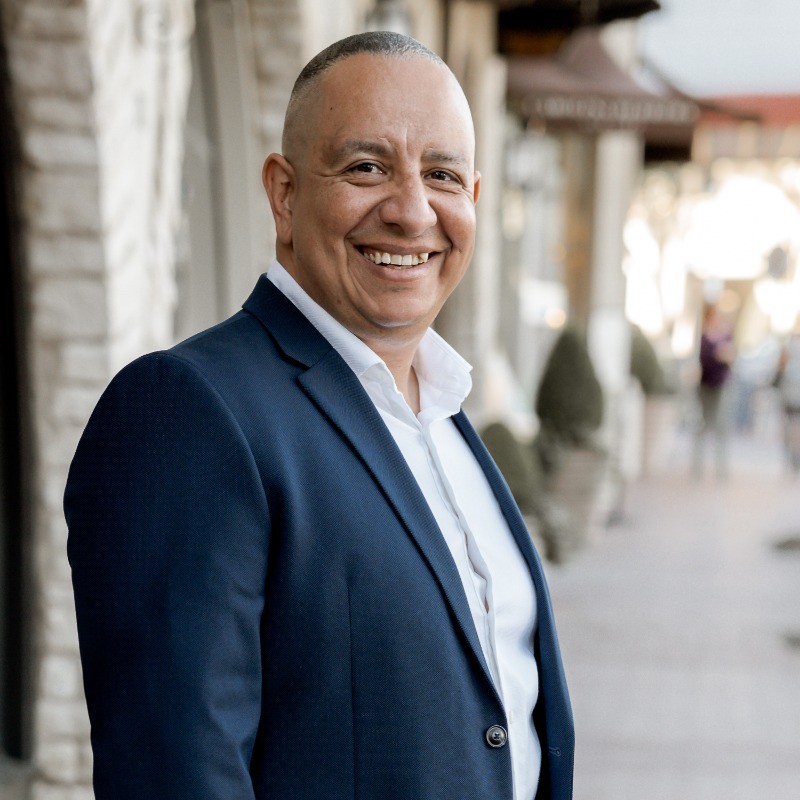
Juan Fernandez is the co-founder of Summit Holdings and the architect behind its MSP-as-a-Service operating model, designed to help MSPs scale faster with US-based, ITIL-aligned service delivery. A long-time MSP owner and operator himself, Juan has built and led high-performing teams focused on cybersecurity, managed services, and standardized frameworks that drive profitability and consistency for providers. He’s widely recognized in the channel as a speaker and strategist around MSP 5.0, AI-driven operations, and community-first growth, and now uses that experience to give MSPs an “elastic service provider” backend they can bolt on without sacrificing client relationships.